

Orlando convention transport needs expertise because it directly determines whether thousands of attendees move efficiently between airports, hotels, and venues, or spend their event frustrated and late. The Orange County Convention Center (OCCC) alone hosts events drawing tens of thousands of delegates, creating logistical demands that go far beyond booking a fleet of vehicles. Transport is a brand-critical touchpoint at large Orlando conventions, shaping delegate perceptions from the moment they land. Pdalimo operates in this environment daily, and the gap between amateur coordination and genuine expertise is visible within the first hour of any major event.
Why Orlando convention transport needs expertise: the core challenge
Convention transport management is the discipline of coordinating all ground movement for an event, covering airport arrivals, hotel shuttles, venue access, VIP transfers, and late-night returns. It is not a driving job. It is an operations job that happens to involve vehicles.
Orlando presents a specific set of complications that make this discipline harder than in most American cities. The OCCC is one of the largest convention centers in the country, with multiple halls, loading docks, and vehicle staging zones, each with its own access rules. Venue-specific knowledge of access points, loading lanes, and staging areas is the operational differentiator that separates expert providers from general car services. A driver unfamiliar with OCCC’s vehicle flow can block an entire loading lane during peak arrival, creating a cascade of delays.
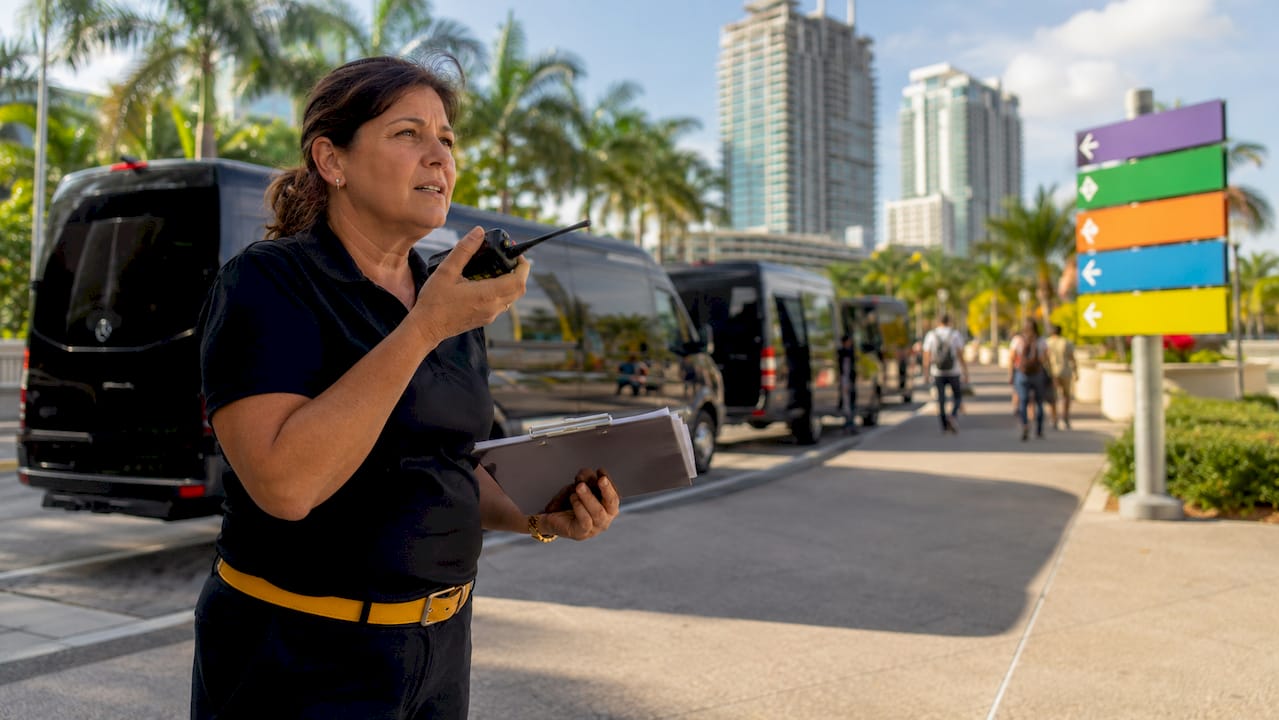
The scale compounds the complexity. A mid-size convention in Orlando can involve 5,000 to 20,000 attendees spread across a dozen hotels on International Drive, Lake Buena Vista, and downtown. Each hotel has its own pickup window, lobby capacity, and traffic pattern. Coordinating shuttle loops across that geography requires route planning, timing buffers, and real-time adjustment, not a printed schedule handed to a dispatcher.
Dynamic schedule changes are the norm, not the exception. A keynote runs long. A flight lands 40 minutes early. A VIP group needs an unplanned transfer to a dinner venue. Real-time affiliate coordination and continuous schedule adjustments are what separate a functioning transport operation from one that collapses under pressure.
- Multi-hotel pickup coordination across International Drive, Lake Buena Vista, and downtown Orlando
- Venue access compliance at OCCC, including loading dock rules and vehicle staging zones
- Airport transfer integration for Orlando International Airport (MCO) arrivals and departures across multiple days
- VIP and executive movement requiring dedicated vehicles, host support, and direct venue access
- Last-minute schedule changes requiring live rerouting and real-time communication with drivers and clients
Pro Tip: Build a 15-minute buffer into every shuttle loop during peak arrival windows. Orlando’s International Drive corridor can add 10 to 20 minutes to any route during morning and evening convention rushes.
How do expert providers improve attendee experience?
Expert transportation providers build a full transport grid before the first attendee lands. That grid covers airport arrivals, hotel transfers, late-night return services, and dedicated VIP movements. Every session schedule and delegate need gets mapped against vehicle availability and route timing. The result is a system, not a series of individual bookings.
The single most valuable structural element is a dedicated point of contact available around the clock. A single accountable transport SPOC prevents fragmented communication and stops small problems from reaching attendees. When a shuttle breaks down at 11 p.m., the event planner calls one number and gets a replacement vehicle, not a chain of voicemails.
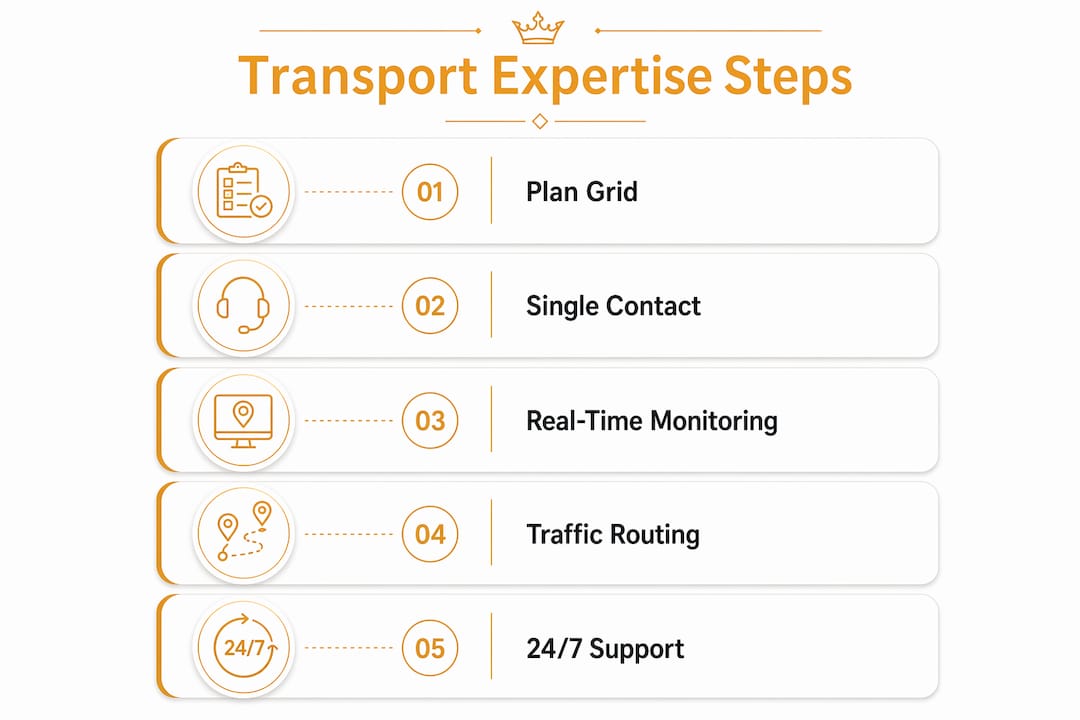
Expert providers also track performance in real time. KPI-driven command center operations monitor wait times, driver professionalism, and communication clarity throughout the event. These metrics predict attendee satisfaction before any post-event survey arrives. A wait time spike at a specific hotel triggers an immediate dispatch adjustment, not a post-mortem apology.
Here is how a professional transport operation structures its service layers for a large Orlando convention:
- Pre-event planning: Route mapping, vehicle permitting, affiliate coordination, and hotel pickup scheduling completed weeks before the event opens.
- Airport arrival management: Flight monitoring, meet-and-greet staffing, and real-time dispatch adjustments based on actual landing times.
- Shuttle loop operations: Timed circuits between hotels and the venue, with live tracking and driver communication through a central command.
- VIP and executive transfers: Dedicated vehicles with host support, direct venue access, and confirmed itineraries for speakers, sponsors, and executives.
- After-hours and contingency coverage: Late-night returns, emergency vehicle deployment, and 24/7 escalation channels for any unplanned need.
Pro Tip: Ask any transport provider to show you their command center protocol. If they cannot describe how they handle a simultaneous vehicle breakdown and a flight delay at MCO, they are not ready for a large convention.
What are the risks of inadequate transportation expertise?
Poor transport planning does not produce minor inconveniences. It produces measurable damage to the event and the organizer’s reputation. Poorly planned transportation causes missed sessions and delegate dissatisfaction even when every other element of the convention is well-organized. A delegate who misses a keynote because a shuttle never arrived does not blame the shuttle. They blame the event.
The risks fall into four clear categories:
- Delegate stress and lost focus: Attendees who spend energy navigating transport confusion arrive at sessions distracted and frustrated. That mental load reduces engagement and lowers satisfaction scores across the board.
- Schedule disruption: Late arrivals from transport failures push session starts back, compress networking time, and force program cuts. A single delayed VIP speaker can unravel an entire morning agenda.
- Reputational damage: Event organizers and sponsors absorb the public perception of transport failures. Negative delegate experiences shared on LinkedIn or industry forums affect future registration and sponsorship decisions.
- Operational burden on event staff: When transport is unmanaged, event staff fill the gap. They field calls, redirect confused attendees, and troubleshoot vehicle issues instead of managing the program. That distraction has a direct cost on event quality.
52% of event planners consider transport reliability more important than luxury accommodation. That finding reflects a hard truth: attendees forgive a modest hotel room, but they do not forgive missing a session because a shuttle never showed.
The most frequent transport failures at large events come from unclear roles and poor staffing in command centers, not from technology limitations. Assigning transport coordination to a general event coordinator without dedicated transport experience is the single most common mistake corporate event teams make.
How to select transportation experts for Orlando conventions
Selecting the right transport partner starts with verifying Orlando-specific experience, not just general event transport credentials. A provider who has managed transport at OCCC or other major Orlando venues understands the access rules, traffic patterns, and hotel geography that a newcomer will learn at your event’s expense.
Evaluate operational capabilities directly. Ask about their command center setup, how they handle real-time schedule changes, and what their contingency protocol looks like for vehicle breakdowns during peak hours. Experienced transportation teams manage route planning, vehicle permits, affiliate coordination, and real-time communication, freeing client teams to focus on the event program rather than logistics.
| Evaluation criterion | What to look for |
|---|---|
| Orlando venue experience | Documented work at OCCC or major Orlando convention hotels |
| Command center capability | Live tracking, real-time dispatch, and 24/7 staffing |
| Fleet adaptability | Mix of shuttle buses, executive sedans, and SUVs available on demand |
| Single point of contact | One accountable manager with direct escalation authority |
| Contingency planning | Written protocol for vehicle failures, flight delays, and schedule changes |
| Contract scope | Clear service boundaries, backup vehicle terms, and communication commitments |
Integrate transport planning into your event logistics from the start, not as an afterthought six weeks before the event opens. The corporate transportation planning process for a major Orlando convention requires lead time for permitting, affiliate coordination, and route testing. Providers who ask for a detailed event schedule and hotel room block data before quoting are the ones worth hiring.
Contract details matter as much as operational capability. The agreement should specify service scope, vehicle types, driver-to-attendee ratios for shuttle routes, contingency vehicle availability, and the name of the single point of contact. Vague contracts produce vague service.
What I’ve learned about transport expertise after years in Orlando events
Transportation is the element event planners underestimate most consistently. Every planner I have spoken with who experienced a transport failure at a major Orlando convention says the same thing: they assumed it would work itself out. It never does.
The planners who avoid that outcome treat transport as a core operational layer, not a vendor category. They bring their transport partner into planning calls alongside the venue team and the AV company. They share the full event schedule, not just the arrival and departure windows. That early integration is what allows a provider to build the kind of transport grid that actually holds under pressure.
Orlando’s specific geography adds a layer that out-of-market providers consistently underestimate. The distance between MCO and International Drive, the traffic behavior on I-4 during convention hours, and the OCCC’s vehicle staging rules are details that only come from local experience. A provider who has run executive limo and shuttle coordination in Orlando knows where the pinch points are before the event starts.
The planners who protect their reputation and their attendees’ experience are the ones who hire for expertise first and price second. Transport failures are expensive. They cost in delegate satisfaction, staff time, and future registrations. The right partner pays for itself.
— Dee
Pdalimo’s convention transport solutions for Orlando events
Pdalimo brings dedicated Orlando convention transport experience to event planners and corporate decision-makers who need logistics handled without surprises.
Pdalimo monitors flight arrivals in real time, plans routes around Orlando’s known traffic patterns, and provides 24/7 support through a single point of contact for every convention engagement. The fleet covers executive sedans, SUVs, and group vehicles, with VIP handling and direct venue access built into every program. Whether you need luxury airport transfers for speakers and executives or full shuttle loop management for thousands of delegates, Pdalimo structures the operation around your event schedule. Contact Pdalimo to discuss your Orlando convention transport requirements and get a plan built around your specific venue, hotel block, and attendee profile.
FAQ
Why does Orlando convention transport require specialized expertise?
Orlando venues like the OCCC have specific access rules, staging zones, and traffic patterns that general transport providers do not know. Expertise in local venue operations and real-time coordination is what prevents delays and schedule failures.
What is a transport SPOC and why does it matter for conventions?
A SPOC (single point of contact) is one accountable manager who handles all transport communication and escalation during an event. A dedicated transport SPOC prevents fragmented information and stops small problems from reaching attendees.
How early should transport planning begin for an Orlando convention?
Transport planning for a large Orlando convention should begin at least 8–12 weeks before the event. That lead time covers permitting, affiliate coordination, route testing, and hotel pickup scheduling.
What KPIs should event planners track for convention transport?
Wait times, driver professionalism scores, and communication clarity are the three core KPIs. KPI-driven command centers use these metrics to adjust operations in real time rather than reacting after delegate complaints arrive.
What is the biggest mistake event planners make with convention transport?
Assigning transport coordination to a general event coordinator without dedicated transport experience is the most common error. The most frequent failures come from unclear roles and understaffed command centers, not from vehicle or technology problems.
Key takeaways
Expert convention transport management is the single most controllable factor between a smooth Orlando event and one that loses delegates, damages reputations, and overloads event staff.
| Point | Details |
|---|---|
| Expertise goes beyond driving | Providers must know OCCC access rules, staging zones, and Orlando traffic patterns to avoid operational failures. |
| A single point of contact is non-negotiable | One accountable transport manager with 24/7 escalation authority prevents fragmented communication and attendee-facing problems. |
| Transport failures damage reputation | Missed sessions and shuttle delays affect delegate satisfaction scores and future event registration, not just the day’s schedule. |
| Early integration protects the event | Bringing transport partners into planning 8–12 weeks out allows route testing, permitting, and contingency planning before the event opens. |
| KPI tracking predicts problems | Monitoring wait times and driver performance in real time lets expert teams correct issues before delegates notice them. |


