
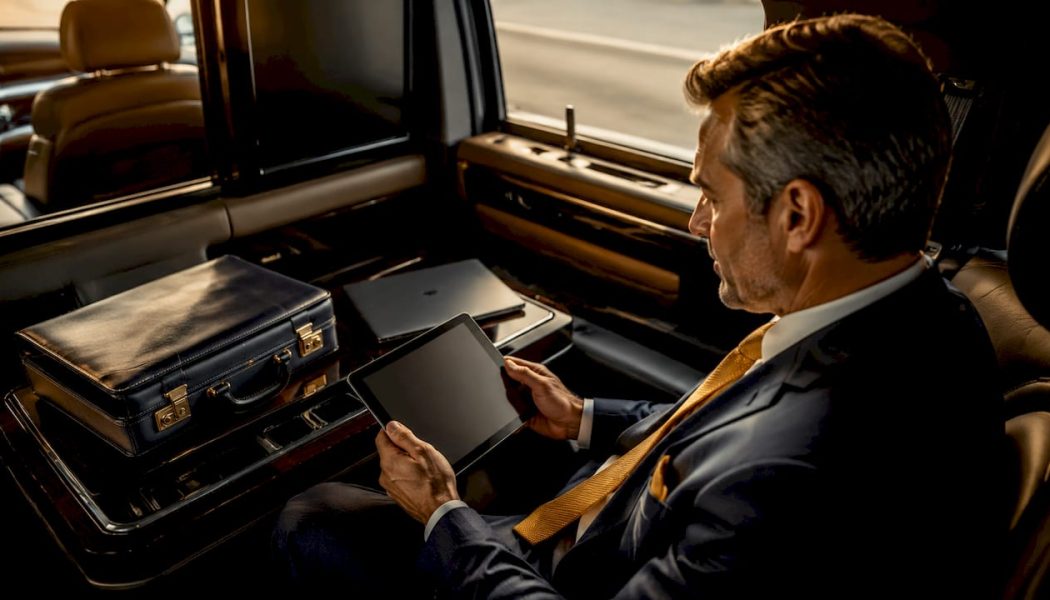
Privacy features in luxury business vehicles are specialized technologies and design elements engineered to deliver discreet, secure transport for executives. The industry term for this category is “executive privacy transport,” and it covers everything from physical acoustic barriers to on-device AI that keeps your voice commands off the cloud. Brands like Lexani Motorcars, Mercedes-Benz, and Zeekr have redefined what confidential transport solutions look like in 2026. For corporate travelers, privacy is no longer an upgrade. It is a baseline requirement built into the vehicle from the ground up.
What are the top 10 privacy features luxury business vehicles offer?
The best executive privacy transport configurations combine physical barriers, digital security, and acoustic engineering into one cohesive system. Each feature below addresses a specific vulnerability that standard vehicles leave exposed.
1. Electronic privacy partitions and smart drop-down windows
Electronic partitions separate the passenger cabin from the driver with the press of a button. They create a physical barrier that prevents the driver from overhearing sensitive conversations. High-end builds from Lexani Motorcars include sound-proofed partitions with integrated 5G and Starlink connectivity, turning the rear cabin into a fully functional mobile office. The partition glass can be frosted or blacked out on demand, adding a visual layer on top of the acoustic one.
2. Electrochromic and AI-dimming glass
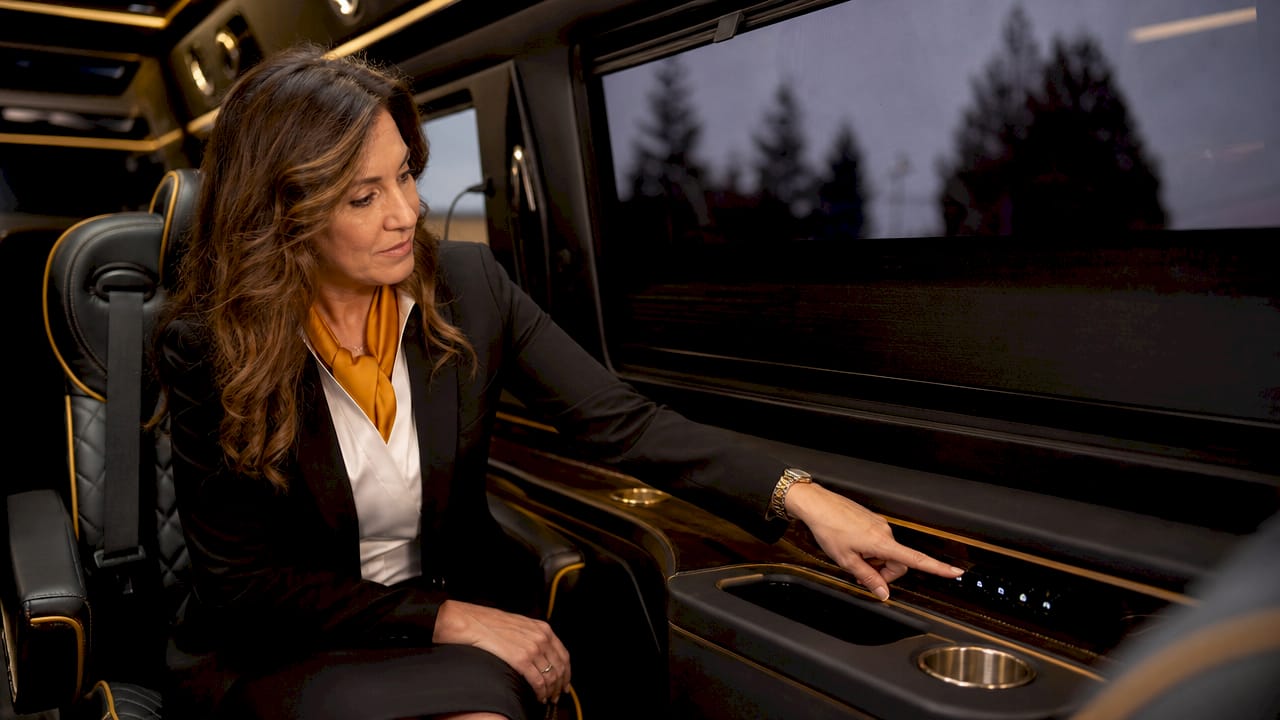
Electrochromic glass switches from full transparency to complete blackout without curtains or blinds. This matters because curtains signal to observers that someone important is inside. AI-dimming glass technology, developed in collaboration with manufacturers like Fuyao Glass, blocks up to 99.9% of UV rays and 99.4% of visible light. That level of blockage creates an instant private environment without any mechanical moving parts that can fail.
3. Advanced soundproofing and acoustic barriers
Acoustic privacy is the most overlooked element in high-end vehicle privacy systems. Visual partitions alone do not stop sound from traveling through floors, ceilings, and door panels. True executive privacy requires acoustic treatments applied to every cabin surface, including the floor and roof. Without this, a conversation held in the rear cabin can be heard clearly in the front seat or through the vehicle’s thin door panels.
Pro Tip: When evaluating a luxury business vehicle, ask the builder specifically which surfaces received acoustic treatment. Floor and ceiling coverage is the differentiator between a quiet ride and a genuinely private one.
4. On-device AI for local data processing
Mercedes-Benz integrates on-device AI processing to handle voice commands and data interactions without sending information to external cloud servers. This is a significant shift from standard connected vehicle systems that route every command through a remote server. For executives discussing M&A activity or sensitive personnel matters, local processing means those conversations never leave the vehicle. The system also delivers faster response times because it does not depend on network latency.
5. Armored and bespoke vehicle builds
Armored builds represent the highest tier of business vehicle security features. SVI’s executive Sprinter, for example, combines B6 ballistic protection with luxury seating and soundproofing in a package that looks identical to a standard high-end van from the outside. That visual consistency is deliberate. A vehicle that looks armored draws attention. One that looks like a premium corporate shuttle does not. Discreet security minimizes the perception of being a target while maximizing actual protection.
6. PIN-coded executive safes and secure storage
Rear center consoles in vehicles like the Zeekr 009 Grand include PIN-coded digital safes controlled via touchscreen. These secure confidential documents, devices, and valuables during transit. The safe integrates into the cabin design without looking like a security feature, which matters for executives who want discretion over visibility. This is the physical equivalent of on-device AI: keeping sensitive assets local and inaccessible to anyone outside the vehicle.
7. Professional-grade tracking and tamper alerts
Sold Secure Diamond certified security systems provide real-time tracking and immediate tamper alerts. These systems install in under 15 minutes and activate automatically when the vehicle is parked or unattended. For executives traveling between meetings, knowing the vehicle has not been accessed or compromised during a stop is a concrete security guarantee. This feature is especially relevant for vehicles carrying sensitive equipment or classified documents.
8. Independent rear climate control
Independent climate zones for the rear cabin serve a privacy function beyond comfort. When a passenger controls their own environment without interacting with the driver, it reduces the need for verbal communication during sensitive calls or meetings. High-end executive sprinters and luxury SUVs typically offer rear passengers full control over temperature, airflow, and seat heating through a dedicated touchscreen or app. This separation reinforces the cabin as a self-contained private space.
9. Integrated video conferencing and secure communications
Lexani Motorcars builds vehicles with integrated 5G and video conferencing systems designed for executive productivity on the move. These systems use encrypted connections rather than standard cellular data, reducing the risk of signal interception. A dedicated screen, camera, and microphone array built into the cabin ceiling delivers boardroom-quality calls from a moving vehicle. This feature eliminates the need to use a personal device on an unsecured network during transit.
10. Privacy-first seating layouts and cabin configurations
Cabin layout directly affects how private a conversation feels and actually is. Forward-facing seats arranged in a conference configuration allow eye contact between passengers while keeping the driver fully separated. Some bespoke builds include rear-facing seats, fold-out desks, and privacy screens between individual seats for multi-passenger executive travel. The luxury SUV service category has adopted many of these configurations for airport and corporate event transfers.
How do privacy-enhanced business vehicles compare in features and cost?
Privacy-focused builds cost significantly more than standard luxury vehicles. Bespoke configurations can reach double the base price of the underlying model, especially for armored executive sprinters with integrated partitions and PIN-coded safes. The table below compares the main vehicle categories by feature set and investment level.
| Vehicle Type | Key Privacy Features | Cost Premium | Best For |
|---|---|---|---|
| Luxury SUV (e.g., Mercedes-Benz S-Class) | On-device AI, tinted glass, acoustic doors | 20–40% over base | Daily executive commutes |
| Executive Sprinter (e.g., Lexani build) | Partition, 5G, video conferencing, soundproofing | 80–120% over base | Multi-stop corporate travel |
| Armored Van (e.g., SVI Sprinter) | B6 ballistic armor, blackout glass, private lounge | Up to double base price | High-profile security needs |
| Ultra-luxury MPV (e.g., Zeekr 009 Grand) | AI-dimming glass, PIN safe, electrochromic windows | Up to double base price | VIP passenger transport |
The trade-off between discreet security and visible armored protection is real. Visible armor signals a high-value target. Discreet builds with equivalent protection cost more because the engineering challenge is harder. Executives who travel in markets where security threats are low but confidentiality is critical will find the Lexani-style executive sprinter the best balance of cost and capability.
What privacy features should executives prioritize by use case?
The right feature set depends on how and where you travel. Not every executive needs B6 ballistic protection. But every executive conducting business in a moving vehicle needs acoustic isolation and digital privacy.
- Confidential meetings on the move. Prioritize acoustic partitions, electrochromic glass, and encrypted communications. These three features prevent both physical eavesdropping and signal interception.
- Long-distance or multi-stop travel. Add independent climate control, video conferencing, and a PIN-coded safe. Comfort and productivity over extended periods require a self-contained rear cabin.
- High-profile individuals with security risk. Armored builds with discreet exteriors are the correct choice. The SVI Sprinter model demonstrates that full ballistic protection and a luxury interior are not mutually exclusive.
- Executives using connected vehicle services. On-device AI, as deployed by Mercedes-Benz, is the non-negotiable feature. Any vehicle that routes voice commands through an external server creates a data exposure risk for sensitive business conversations.
Pro Tip: If you use a corporate chauffeur service rather than owning the vehicle, ask the provider specifically which privacy features are active in their fleet. Tinted windows are not the same as acoustic partitions or encrypted communications.
Key takeaways
The most effective privacy features in luxury business vehicles combine acoustic isolation, electrochromic glass, and on-device AI to create a genuinely secure and confidential environment for executives.
| Point | Details |
|---|---|
| Acoustic treatment is non-negotiable | Visual partitions alone do not stop sound; all cabin surfaces need treatment. |
| On-device AI protects digital privacy | Mercedes-Benz’s local processing keeps voice data off external servers entirely. |
| Discreet builds outperform visible armor | Vehicles that look standard draw less attention while delivering equivalent protection. |
| Cost premiums are substantial | Bespoke privacy builds can reach double the base vehicle price for full configurations. |
| Feature priority depends on use case | Match features to your specific travel scenario rather than buying the maximum spec. |
The privacy arms race in executive transport is just getting started
The convergence of physical security and digital privacy in vehicle design is the most significant shift I have seen in executive transport in years. For a long time, “private vehicle” meant tinted windows and a partition. That definition is now obsolete.
What strikes me most is the Mercedes-Benz on-device AI move. Most vehicle manufacturers are racing to add connectivity. Mercedes is racing to remove cloud dependency. That is a fundamentally different philosophy, and it is the right one for executives who understand that their biggest vulnerability is not a physical threat. It is a data leak from a voice assistant sending commands to a server they do not control.
The Lexani Motorcars approach, treating the vehicle as a mobile sanctuary with integrated 5G, soundproofing, and video conferencing, points toward where the market is heading. The fully integrated mobile office is not a concept anymore. It is a product you can book today. The executives who recognize this will stop treating their transit time as dead time and start treating it as productive, private work time.
Bespoke modifications will keep growing in demand. The executives who need the most privacy are also the ones who cannot afford to look like they need it. That tension between visible security and discreet protection will drive the next generation of armored luxury builds toward even more sophisticated exterior designs.
— Dee
Pdalimo’s executive fleet for discreet corporate travel in Orlando
Executives traveling through Orlando need more than a comfortable ride. They need a vehicle environment where confidential conversations stay confidential.
Pdalimo operates a fleet of privacy-enhanced luxury vehicles with professional chauffeurs trained for discreet, secure transport. Every booking includes flight monitoring, route planning around traffic, and 24/7 support. Whether you need luxury car services in Orlando for a single airport transfer or ongoing corporate travel, Pdalimo’s team handles the logistics so you can focus on the work. Explore Pdalimo’s corporate transportation options to find the right vehicle configuration for your privacy and security requirements.
FAQ
What are privacy features in luxury business vehicles?
Privacy features in luxury business vehicles are physical and digital systems designed to prevent eavesdropping, visual exposure, and data interception during executive transit. They include acoustic partitions, electrochromic glass, on-device AI, and armored builds.
How much do privacy-focused luxury vehicles cost?
Bespoke privacy configurations can cost up to double the base vehicle price, depending on the level of armoring, acoustic treatment, and integrated technology. Standard luxury SUVs with privacy upgrades typically carry a 20–40% premium over the base model.
Does tinted glass provide enough privacy for business executives?
Tinted glass provides visual privacy but does not address acoustic or digital vulnerabilities. Executives conducting confidential meetings require acoustic partitions and encrypted communications in addition to window tinting.
What is on-device AI and why does it matter for vehicle privacy?
On-device AI processes voice commands and data locally within the vehicle without sending information to external cloud servers. Mercedes-Benz uses this approach to prevent sensitive conversations from being stored or transmitted off the vehicle.
What is the most discreet type of armored executive vehicle?
Armored builds that match the exterior appearance of standard luxury vans, such as the SVI executive Sprinter with B6 ballistic protection, provide the highest security without signaling that the occupant is a high-value target.


